Monoprice Cadet Reviews: See Why 0 Shoppers Rated It 0 Stars!
We gathered 0 reviews of the Monoprice Cadet 3d printer to answer one thing: Does it live up to its 0/5 score?


 Recaptor
 Monoprice Cadet: An Entry-Level FDM 3D Printer With Practical Features for Beginners
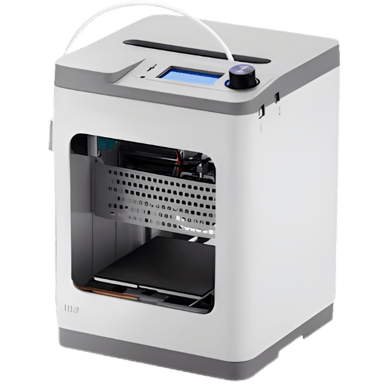
The Monoprice Cadet stands out as a noteworthy 3D printer designed for beginners stepping into the world of additive manufacturing. As a prebuilt FDM/FFF desktop unit targeted squarely at consumers, it promises an accessible entry point into 3D printing without overwhelming complexity. Built for crafting miniatures, jewelry, and engineering prototypes, this printer offers solid performance parameters based on its product name and specs, making it a compelling choice for hobbyists and early makers eager to explore 3D design and fabrication. Given its manageable build volume and simple user interface, it aims to strike a balance between user-friendliness and reliable print quality.
Detailed Specs & Features
On paper, the Monoprice Cadet presents a compact and lightweight profile, measuring just 7.9 inches in width and depth and standing 11.2 inches tall, weighing around 6.6 pounds. This smaller footprint facilitates setup in diverse environments, from desktops to small workshop corners, with a build width and build depth of approximately 4 inches each, culminating in a modest build volume of 104.1 cubic inches.
This size is ideal for smaller prints but limits large-scale models. Its power system supports a wide voltage range (100-240 volts), making it versatile for global users, and an external power supply contributes to safety and easier maintenance. The printer runs at a moderate power consumption of 60 watts during operation, which is reasonable for a consumer desktop unit. Cooling fans are incorporated, though notably, there is no energy-saving mode, so it runs steadily when powered.
The build mechanics utilize a Z-axis framed design enclosed within a closed chamber, promoting consistent environmental conditions during printing. The metal build plate has a sandblasted surface that enhances print adhesion of materials like PLA and PLA+; the only filament types supported per specs. The absence of a heated bed or dual extruder system means this printer is optimized specifically for simpler single-material projects rather than complex multi-material or high-temperature prints. The maximum extruder temperature reaches 482°F, which comfortably handles PLA and PLA+, but not more demanding filaments.
Connectivity options include Wi-Fi alongside SD Card and USB support, providing flexible file transfer methods for different user preferences. The 7-inch screen, although not a touchscreen, operates at a sharp 1620x2560p resolution, offering readable control panel feedback but no camera or advanced remote monitoring features. Firmware updates are supported but must be applied manually, reflecting a basic but workable software environment.
User Experience & Performance (Based on Specs)
Design & Build
In daily use, the Monoprice Cadet impresses with its no-assembly-required, prebuilt model design that truly lowers the barrier to entry. Its compact dimensions and moderate weight make it highly portable and suited for home or office settings where space is limited. The metal build plate's removable and sandblasted surface aids in strong initial layer adhesion, complemented by manual bed leveling, which adds some user involvement but keeps things straightforward. What makes this setup notable is its closed enclosure and incorporated chamber lighting, which together improve print consistency by stabilizing temperature and allowing for visual monitoring. However, the lack of auto bed leveling and filament sensors means more active user supervision may be necessary to maintain high success rates.
Performance
The official max print speed of 30 mm/s, with a practical effective rate closer to 20 mm/s, indicates a focus on print quality over sheer speed. The printer layers prints at resolutions ranging from 30 to 100 microns, capable of delivering detailed objects, especially important for miniatures and jewelry. On top of this, the 0.4 mm nozzle diameter conforms to industry norms for fine accuracy, but there's no option for nozzle swaps, limiting customization. Print success rate is noted at a respectable 90%, suggesting a generally reliable output provided print conditions are carefully managed. Auto shutdown on error and overheat protection add robust safety layers, further underpinned by CE and FCC safety certifications. Noise output at 45 dB during printing is tolerable, though slightly higher than some ultra-quiet machines, while idle noise sits low at 30 dB.
Camera / Display / Audio Quality
Though the device lacks a built-in camera or time-lapse functionality, the 7-inch, 1620x2560p screen provides clear, if basic, user interaction without touchscreen responsiveness. Audio noise levels are moderate, ensuring that the printer doesn't disrupt working or living environments excessively.
Extra Features
Some features stand out by their absence: there is no filament runout sensor, power loss recovery, or remote monitoring, which means the user must actively manage print jobs. The print adhesion system uses metal parts for durability, but there's no air filtration or resin cartridge system; consistent with its FDM focus. Maintenance requires lubrication every 100 operational hours, and while spare parts are available, the lack of easy tool-free maintenance or nozzle replacement capabilities suggests some upkeep complexity for beginners.
Pros & Cons
Pros
- Prebuilt, no assembly required, facilitating immediate use
- Compact dimensions with a reliable closed enclosure and chamber lighting
- Strong safety features, including overheat protection and auto shutdown
- Supports widely used PLA/PLA+ filament and third-party materials
- Accessible 7-inch high-resolution screen aids navigation
Cons
- Small build volume limits project size
- No auto bed leveling or filament runout sensor requiring manual oversight
- Lack of multi-material capability and nozzle interchangeability restricts versatility
- No energy-saving mode or remote monitoring features
- Maintenance requires lubrication; no tool-free servicing
Price & Value for Money
Costing approximately $300 at $300 at Monoprice, this printer sits comfortably within the budget-friendly segment for entry-level 3D printers. Given its 1-year warranty period and approachable power specifications, the pricing feels justified for users who do not expect advanced features. For beginners who want a ready-to-run printer with decent safety features and good print success rates at a modest volume, it offers solid value. However, those expecting expansive build dimensions or multi-material printing may find the cost-performance ratio less attractive.
Quick Take
In short, the Monoprice Cadet offers a compact, beginner-friendly platform with reliable build quality and sensible safety certifications. If we look at the numbers alone, it's well-tuned toward users who prioritize ease of use and consistent PLA printing over speed or versatility.
Closing Recommendation
This model appears to perform best for hobbyists and newcomers aiming for smaller-scale projects that don't demand multi-material capabilities or large prints. It helps users achieve quality and safety in 3D printing without the complexity of assembly or advanced calibration, though preparedness for manual maintenance is advisable. Those seeking an affordable, simple device to experiment and learn will likely find it a helpful companion.
Verdict
Rating: Based on the specifications and overall feature set, we believe Monoprice Cadet deserves 3.8 out of 5.
- Winner Feature => Excellent accessibility for beginners with prebuilt design and robust safety certifications.
- Needs Improvement => Limited build volume and lack of automated features may restrict usability as skills grow.
Reviews 0
The good, the bad, and the brutally honest.Average Rating


More 3D Printers 453
Unlock more awesome finds.